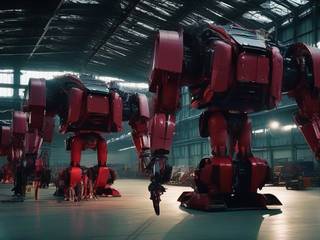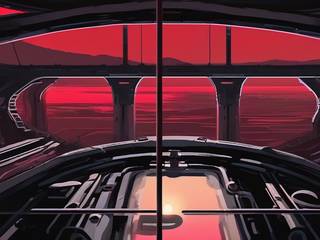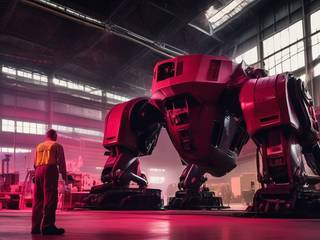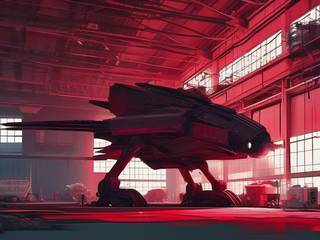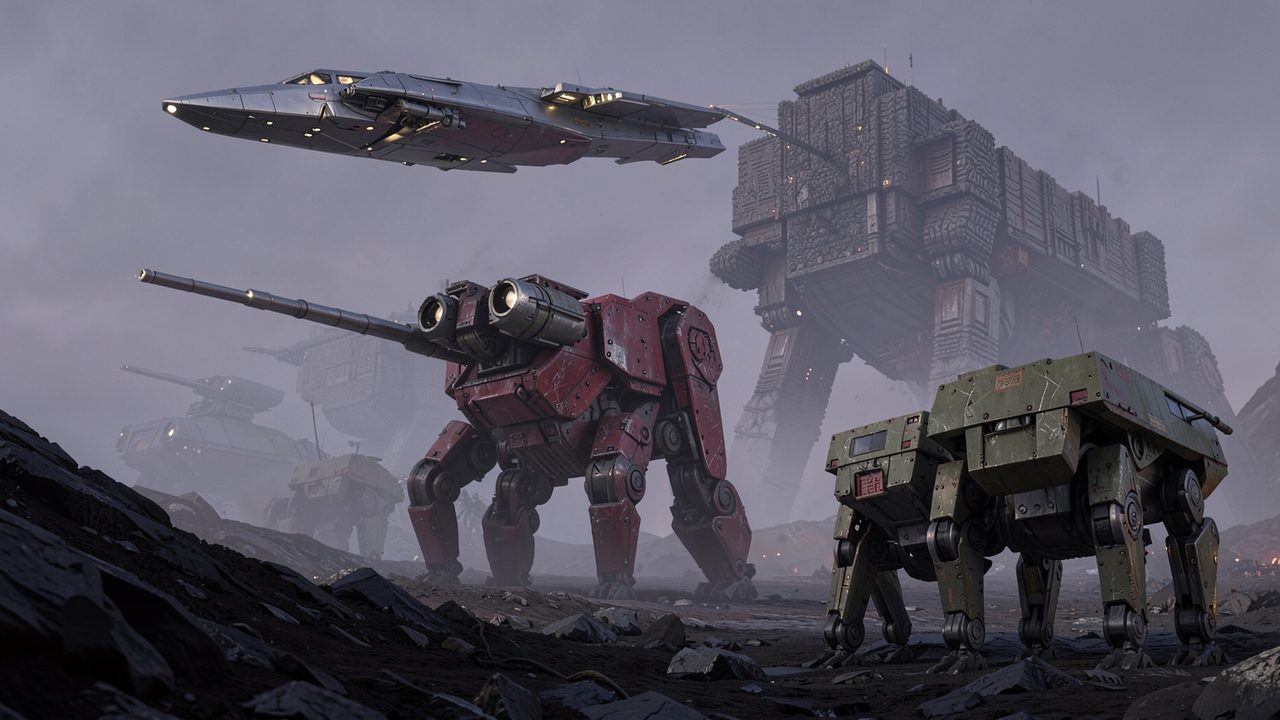
A dusk battlefield with war machines of very different sizes: a crimson four-legged walker with a long cannon, two boxy olive walkers in the foreground, a colossal fortress walker towering in the haze behind and a long battlecruiser in the sky.

Type 1-X MechaTech-Tier Real-Time Strategy

Reactorcore's Personal Game Design Project

Free to forkNo licence and no copyright claim: build this game under your own name, or lift one idea from it. Why?

Game overview

Type 1-X Mecha is a base-building real-time strategy game where every unit is a mecha, and the mecha come in six Types, each one a leap in technology: from lumbering primitive walkers up to colossal fortress machines and the star gods beyond them.

Battles happen on planets and in space: Command & Conquer-style bases on the ground, Homeworld-style carriers and battlecruisers in orbit. At the low end, weapons are single shots that hit one target. At the high end, they sweep lines, cones and whole circles of the battlefield, and the gap between an Evangelion's blast and a main battle tank's cannon is meant to be frightening.

The Type scale comes from Reactorcore's AAL universe, where mecha are graded this way. The designs it draws on are named openly: Gundam, Evangelion, Gunbuster, Armored Core, Front Mission and Gargantia for the machines, Red Alert 2, Empire Earth and Homeworld for the strategy.

Target audience

Mecha fans who love the difference between a clunky walker, a mobile suit and a super robot, and strategy players who love a big army but find most RTS rosters a list of interchangeable tanks.

They want scale you can feel: a battle where it matters what generation of machine you field, and a hangar of designs that are their own.

Classic RTS mouse and keyboard, with modern conveniences, and a pause whenever it's needed.
Game's purpose

Power: the awe of commanding machines from a walking tractor to a planet-buster.

Creation: designing your own mecha and seeing them fight.

Growth and understanding: a battlefield that rewards knowing what beats what and why.

It deliberately avoids draining clarity (every damage type and armor class is shown plainly) and ease (the unit maker hides what doesn't fit instead of punishing a wrong build).

Core concept

RTS rosters are usually one tech level wide: infantry, tanks, artillery, a superweapon, all built from the same era. Mecha games are usually about one pilot.

Here the whole army sits on a six-step ladder of technology, with each step changing what units can do, how their weapons hit, and even what a base is.

A unit maker lets every design be your own, and every battle can be set at a different rung of the ladder, so the scale of war itself varies from campaign to campaign.

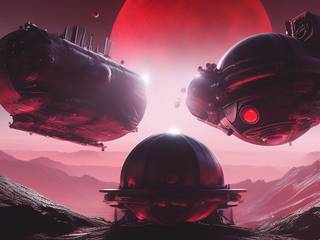
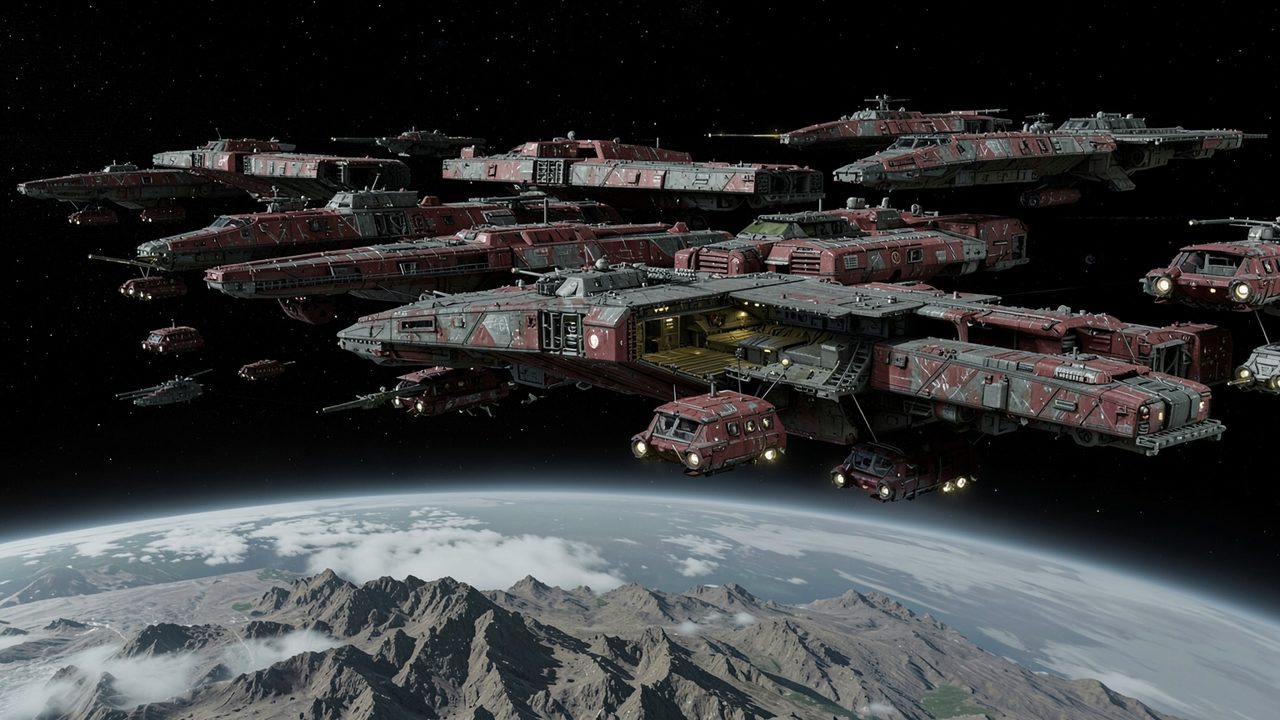
A rocky planet seen from orbit, a fleet of long armored battlecruisers and carriers in crimson and gunmetal hanging above it.
"In orbit the carriers are the bases. On the ground, the bases are built from scratch, or taken."

Lore and story

The Types

In the AAL universe, Alteisen Arsenal Laboratories, the neutral arms company that supplies everyone, grades every war machine by Type. The rule is simple: a higher Type has all the technology of the lower ones and is better at almost everything, by a vast margin. A specialist from a lower Type can outdo a higher one at one or two things, but never across the board.

Size isn't the measure. A Type 1 can be enormous and a Type 4 can look deceptively plain; what sets them apart is what's inside.

The uncharted systems

Beyond the edge of the galactic community lie star systems where civilizations of every technology level still fight over planets: warlord states fielding rusty walkers, militaries with mobile suits, and a few with machines that shouldn't exist outside a legend. Monster hives grow in the gaps.

You command an expedition fleet sent to end those wars, one system at a time, and the enemies you meet fight with the same rules, the same economy and the same ladder of Types as you.

The campaign right now

The fleet has dropped out of FTL at the edge of a contested system. The carrier's hangar holds your designs. Down on the nearest moon, someone has built a base, and they've seen you arrive.

Controls and interface

The controls are Red Alert 2's, brought up to date with what Zero-K and Beyond All Reason showed an RTS can do: queued orders, area commands, formation drags and repeating factory queues. Units choose sensible targets on their own, so commanding is about plans, not clicks.

Orders

Left click, drag
Select; box-select
Right click
Move, attack or interact
Right drag
Formation move: line and facing
Shift
Hold to queue orders

Formation and fire

A / G
Attack-move; guard an area
X / C
Spread out; close up
P
Target priorities for the group

Production

Click a factory
Queue units; Ctrl to repeat
T
Base plans: place a whole block
U
Unit maker

View

Tab
Switch between the surface and orbit
Ctrl + 1–9
Make a group; 1–9 selects it
Space / Esc
Pause; menu and save

Every unit's Type, damage type and armor class are shown on it as a small color-coded badge, so a glance at the battlefield tells you who's dangerous to whom.

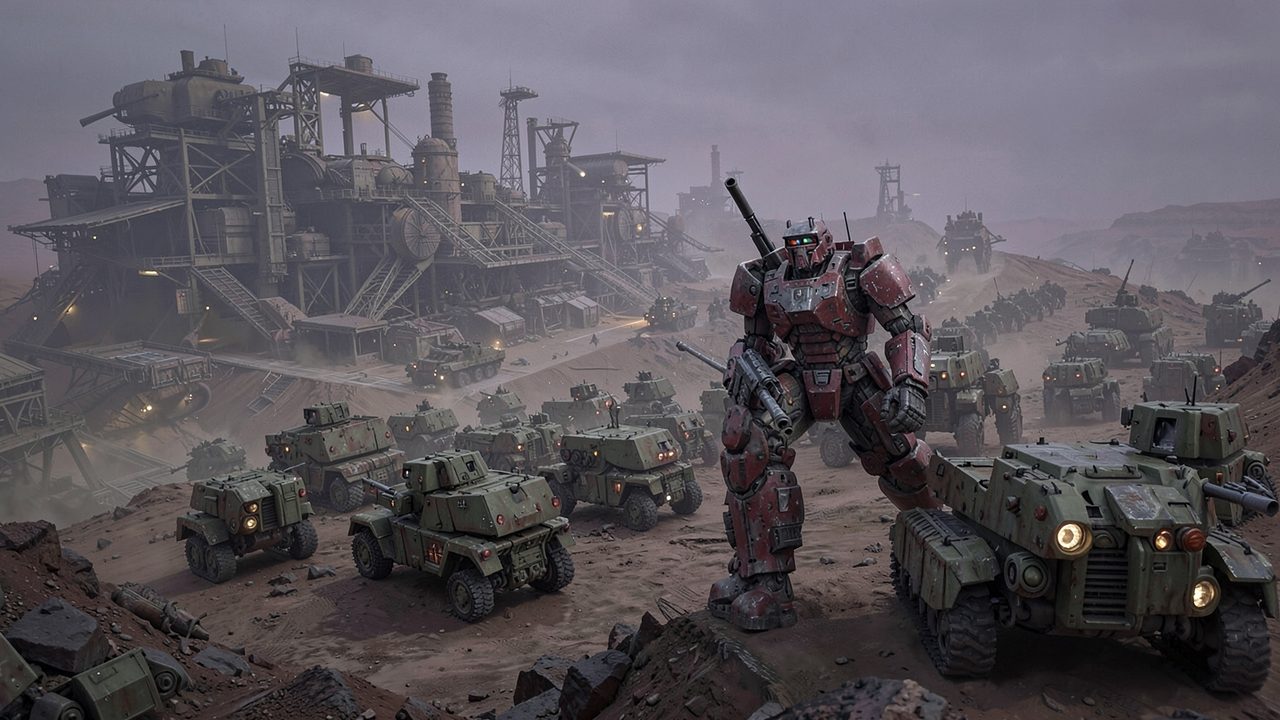
A rocky battlefield where a mixed army moves out from a hilltop base of factories and gantries: a crimson bipedal war mecha with a cannon among rows of boxy armored vehicles.
"A Type 1 marches in hundreds. A Type 3 carries any weapon it can pick up."

Game layers

  1. 01 · Moment-to-moment

    Combined arms across the ladder

    Build a base, mine, produce. Put together groups that cover each other: walkers to hold ground, specialists for the jobs they excel at, a few high-Type machines to break the line. Match damage to armor, spread your formations when the enemy fields wide-area weapons, and keep an eye on what the enemy is building up to.

  2. 02 · Low metagame

    A system campaign

    A campaign frees one star system: a generated set of battles on its moons and planets and in the space between them. Each system has its own epoch band, the range of Types its wars are fought with: a brushfire of Type 1 and 2 walkers on a backwater moon, or a clash of Type 5 fortresses over a capital world. The campaign ends when the system's last warlord or hive is gone.

  3. 03 · High metagame

    The fleet and its hangar

    The expedition fleet is your persistent home. Its hangar keeps every design you've made, each with the record of where it fought, and the star map behind it shows the systems you've freed and what they became afterwards.

    Beyond the charted edge there's always another system at war, at another rung of the ladder.

  4. 04 · Practical game flow

    A battle an evening

    A battle takes half an hour to an hour, a system a few evenings. It's singleplayer, so pause whenever you like and save mid-battle. Tinkering in the hangar between battles takes exactly as long as you want it to.

Game modes

ModeWhat it isWhat it's for
CampaignThe expedition: generated system campaigns on the star mapThe main game, with your fleet and hangar carrying from system to system
SkirmishOne battle on a generated planet or in orbit, at the epoch band, size and opponents you pickA single evening's war, or a proving ground for a new design
The expeditionEndless: system after system.
A systemPlanets, moons and orbit, at one epoch band: a few evenings.
A battleOne planet or one orbit: half an hour to an hour.
An engagementOne group's fight: a minute or two.

Features and mechanics

  1. The heart of it

    Six Types, six leaps

    Like Empire Earth's epochs or the Kardashev scale, each Type is a jump in power, mobility and capability, not a few more hit points:

    TypeIts place in an armyWhat sets it apart
    1 · PrimitiveThe infantrySlow, lumbering brute-force machines with fixed weapons; cheap and many. Think a walking tractor, junk mechs, MechWarrior.
    2 · SpecialistThe vehicles: tank, APC, artillery, anti-air, anti-infantryA generation better, and each excels at its one doctrine. Think Front Mission's wanzers, Votoms, Macross fighters.
    3 · Full-aspectThe super unitsGundam-sized, with real hands: it switches weapons mid-battle and carries whatever it picks up. Its own reactor, but it still needs a base or carrier for repairs.
    4 · Beyond limitsThe ultra unitsAbout the same size, far beyond in everything: repairs and refuels itself, travels alone, and can build its own support machines and outposts.
    5 · ColossusThe mega machinesA hundred meters and up: fortresses, carriers, walking cities. Think Evangelion, Gunbuster, a combining giant.
    6 · Star godThe end of the ladderGravity-well and aura drives that need no exhaust, barrier fields, contained micro-singularities as weapons.
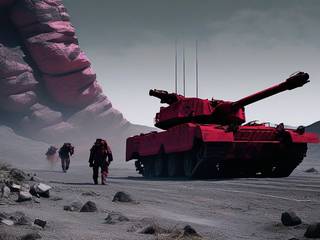
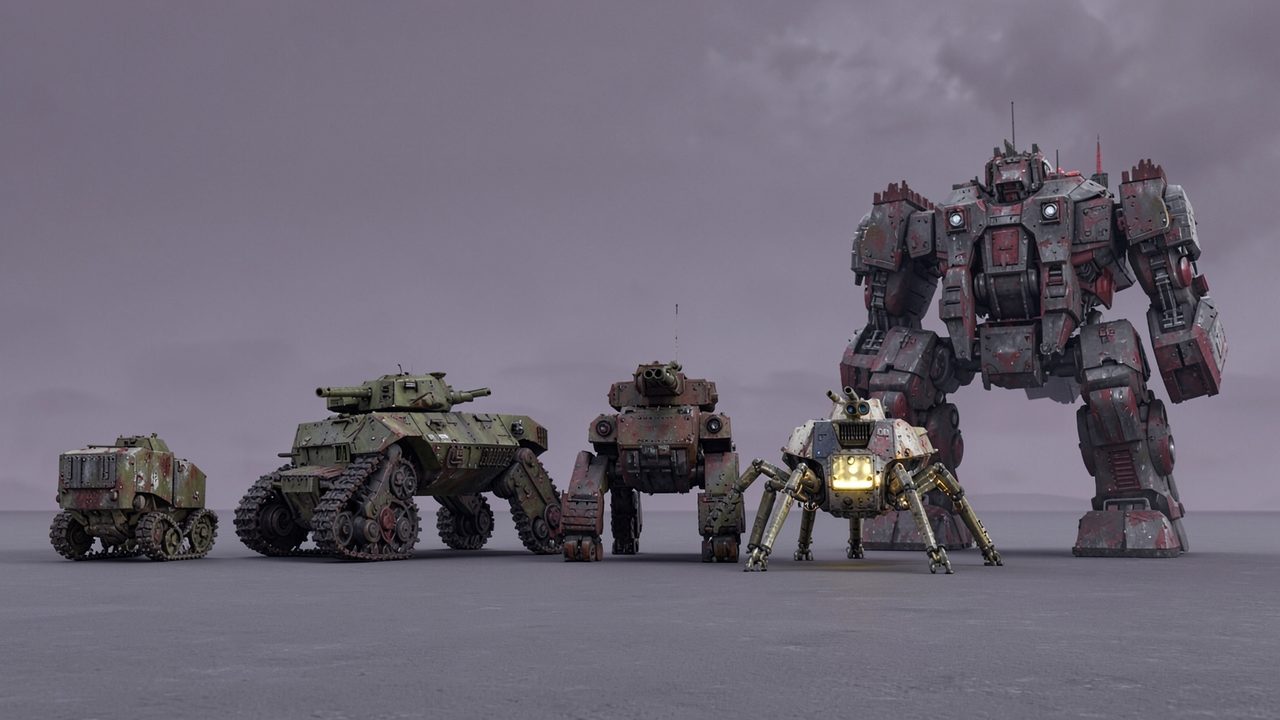
    A lineup of war machines of steadily increasing size side by side on a flat plain, from a small tracked cart and a tank to a spider walker and a towering crimson bipedal mecha.
    "Each Type has all the technology of the ones below it, and outclasses them by a vast margin."
  2. Size and technology, separately

    Type 1-3, Type 6-1

    Every unit carries two numbers. The first is its class, its size and battlefield role; the second is its true technology. A Type 1-3 is infantry-sized but built with Type 3 technology: a commando suit with real hands and its own reactor. A Type 6-1 is a colossal machine built with primitive technology: terrifying to look at, and beatable by a well-handled squad of Type 3s.

    The notation works both ways, so the roster can hold ultra-advanced small units and low-tech giants, and every one of them is readable at a glance.

  3. Three plus one

    Four kinds of damage

    Every weapon deals one of four damage types and every unit wears one of four armor classes, a small weak-and-resist chart in the spirit of Pokémon's, with the elements kept to three plus one so it stays learnable:

    DamageStrong againstWeak againstLooks like
    KineticOrganicMetalShells, slugs, tracers
    EnergyCompositeOrganicBeams and plasma
    ChemicalMetalCompositeAcids, incendiaries, corrosive clouds
    DimensionalVirtualNothingWarped space, rifts

    The first three form a triangle among metal, composite and organic armor. The fourth pair belongs to the top of the ladder: virtual armor, phase-shifted and barrier-field defenses, shrugs off the three ordinary damage types, and only dimensional weapons fully reach it. Each type has its own color and effect on the battlefield, so matchups are visible, never memorized.

  4. From a dot to a sweep

    Weapons that grow shapes

    Low-Type weapons work like Tiberian Sun's warheads: a shot travels from one point to another and hurts what it hits. Higher up, weapons stop being points. They fire lines, cones, rectangles and circles, or smart munitions that pick their own targets, and a single high-Type blast can clear a stretch of battlefield that a whole battalion of tanks couldn't.

    It changes how armies move. Against point weapons you mass up; against a cone or a beam you spread out, and the formation controls exist for exactly that.

  5. The ladder changes logistics

    What a base is depends on the Type

    Types 1 to 3 need bases: factories to be built in, repair bays to come home to, carriers to take them anywhere far. Type 4 machines repair and refuel themselves and can build their own support units and outposts, so a lone Type 4 behind enemy lines is a base waiting to happen. A Type 5 simply is a base, a walking fortress or carrier with its own factories inside.

    So a low-band war is classic Command & Conquer, all supply lines and base sieges, while a high-band war is a few enormous moving strongholds and whatever they carry.

  6. The scale of the war is a setting

    Epoch bands

    Climbing from Type 1 to Type 6 in every single match would make every battle the same ramp. Instead each campaign and skirmish has an epoch band, the range of Types that war is fought with, and within a battle you can research your way up a step or two inside it.

    One system is a muddy war of walkers and tanks, the next a duel of mobile suits, the one after a clash of colossi. The generator chooses, or you do in Skirmish. The same designs, the same rules, very different wars.

  7. Design your own

    A unit maker that greys out what won't fit

    The game ships with a ready-made roster, each unit with sensible loadouts, so you can play without ever opening the editor. When you do, it works like building a mecha in Armored Core or Daemon X Machina: pick a frame, then fit the arms, legs, weapons, generators and systems.

    The trick, borrowed from Reactorcore's design for a Reassembly overhaul, is that parts that don't fit are greyed out. A Type 2 frame can't take a Type 5 reactor; a frame without hands can't hold a handheld rifle. You never build something broken by accident, and the list of what's possible stays short enough to read.

  8. Ground and orbit

    Planets and space

    On a planet or moon, war looks like Command & Conquer: terrain, bases, walls, harvesters and convoys. In orbit it looks like Homeworld: carriers and battlecruisers are the mobile bases, mecha launch from their bays, and fights happen in open space around them.

    The two connect. Orbit decides who can land reinforcements and who gets bombarded; the ground decides who holds the planet. A campaign moves between them.

  9. Content that multiplies

    One kit for everything

    Every unit, building, carrier and prop is assembled from the same library of modular low-poly parts, made in a kit tool such as Asset Forge. That makes the unit maker and the art pipeline the same thing: a new arm or cannon is instantly available to every frame it fits, the enemy's included.

    Nothing is hard-coded: units, buildings and carriers live in a database and in scrolling lists, never in fixed slots, so the game can keep growing with new Types of variants for as long as anyone wants to add them.

Trivia

Two RTS ideas in one notebook

Type 1-X Mecha shares its design file with Temporal Shift, an RTS built around slow motion and time travel, and Reactorcore's note says the two could be combined into a single project. Temporal Shift's fixes to the classic RTS, like formations that fight together, an AI that never cheats and generated campaigns instead of scripted missions, are meant for this game too.

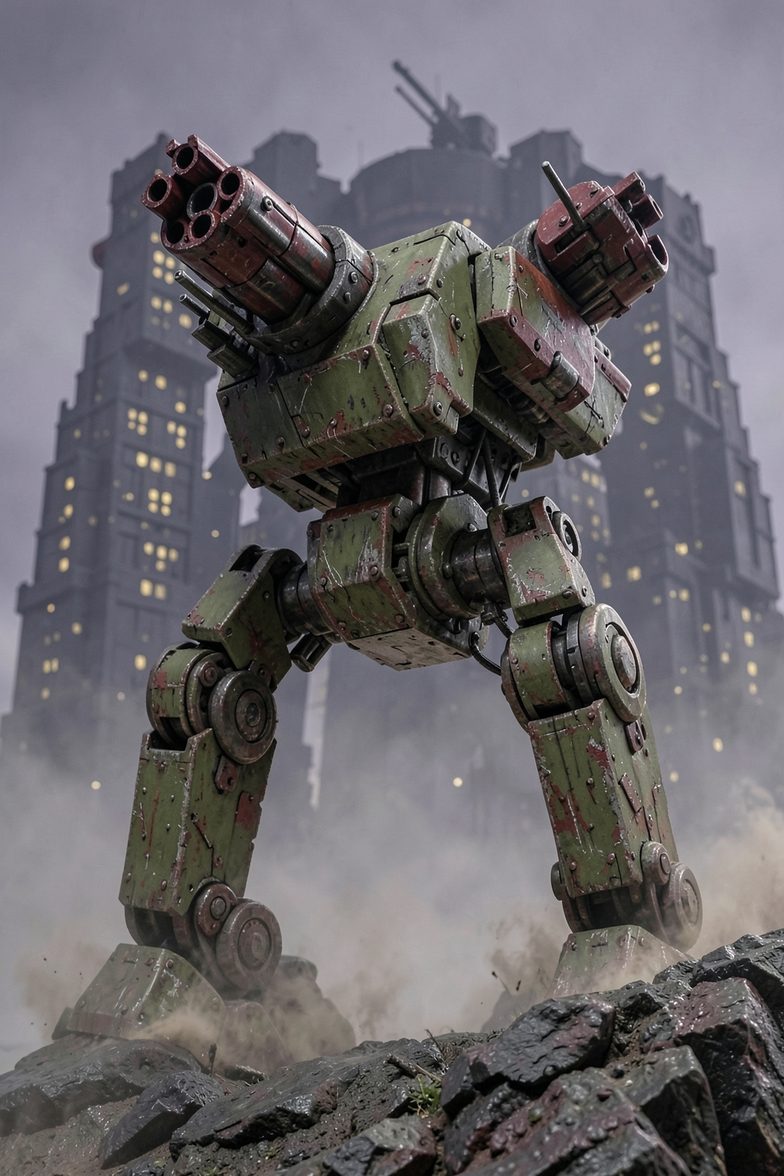
Box art: a heavy olive and rust bipedal walker mecha with shoulder rocket pods stands on a rocky ridge in a cloud of dust, dark towers with lit windows looming behind it.

Classification briefing

Type 1-X Mecha: Tech-Tier Real-Time Strategy

Type 1: it walks. Type 2: it specializes. Type 3: it picks up a rifle. Type 4: it builds its own army. Type 5: it is the base. Type 6: it bends space.

Your hangar holds every one of them, and anything you care to design in between. The system ahead is at war. Choose your Types.

Every Type outclasses the last. Know what you're fielding.