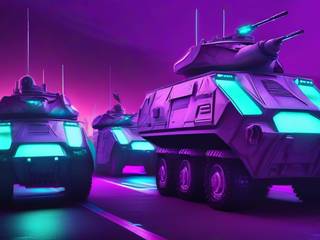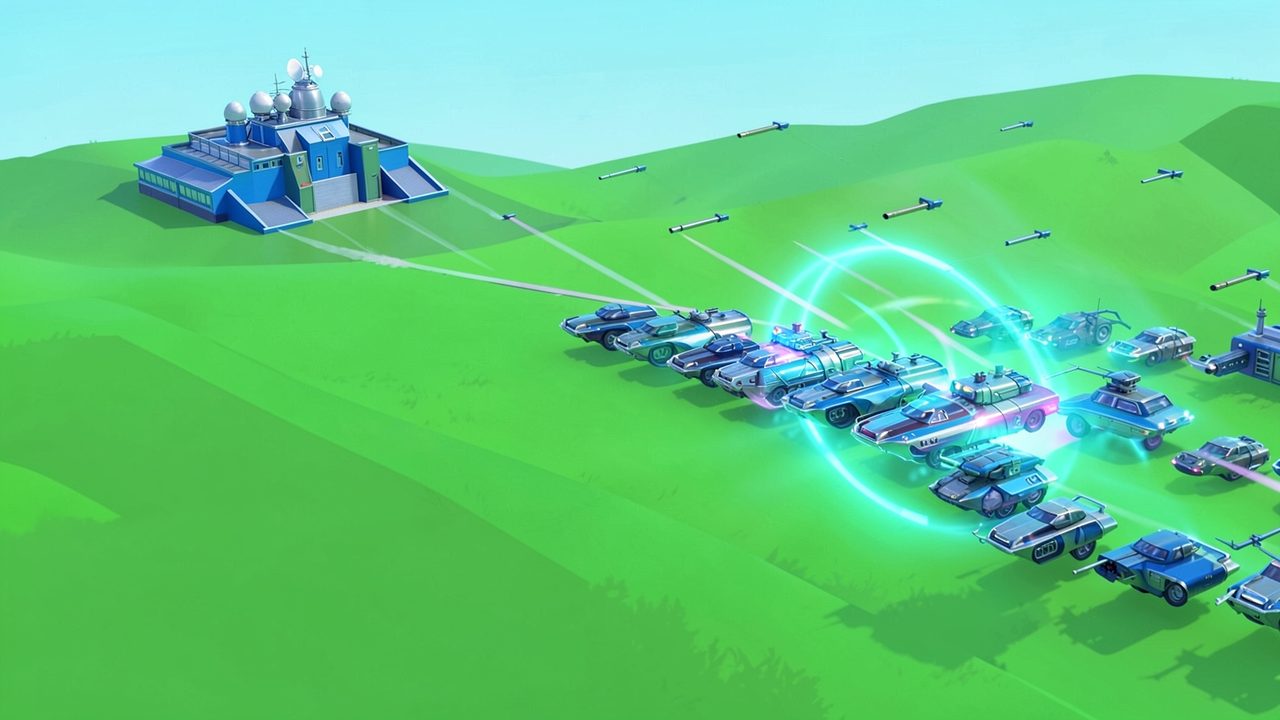
Smooth green hills where a column of blue and silver tanks rolls past a blue domed base, missiles hanging in the air above them, the lead tanks passing through a glowing teal ring of distorted time.

Temporal ShiftTime-Bending Real-Time Strategy

Reactorcore's Personal Game Design Project

Free to forkNo licence and no copyright claim: build this game under your own name, or lift one idea from it. Why?

Game overview

Temporal Shift is a classic base-building real-time strategy game in the style of Red Alert 2 and Tiberian Sun, with one thing those games never gave you: time. Slow the battle to a crawl or stop it entirely, lay out a plan, and watch it unfold.

Time is also a weapon. You can send a unit a short way into the future to reappear where you want it, call in reinforcements from a future you then have to make happen, and drag enemy time travellers back into the present before they arrive.

Underneath the time machinery is a long list of fixes to what makes classic RTS games exhausting: units that feed themselves to the enemy one at a time, an AI that cheats, campaign missions with only one right answer, and the demand that one person do the work of a thousand specialists in a few frantic minutes.

Target audience

Players who grew up on Red Alert 2 and Tiberian Sun and loved the bases, the armies and the waypoints, but always felt the game went too fast to use any of it. They want to command like a general, and got stuck clicking like a switchboard operator.

They want the satisfaction of a plan that works, not a contest of clicks per minute.

Mouse and keyboard, classic RTS controls. Because time can stop, nothing ever depends on fast hands.
Game's purpose

Power and choice: commanding a whole army with real control over what every part of it does.

Growth and understanding: reading a battlefield, planning combined-arms tactics and seeing them play out.

Fairness and order: an opponent bound by the same rules, and units that do what a sensible soldier would.

It deliberately avoids draining ease (no frantic multitasking) and trust (no AI that builds what it couldn't, and no mission that only works one way).

Core concept

The classic RTS rewards speed over thought: whoever clicks fastest builds the biggest blob of units and wins. Its campaigns are handmade puzzles with one intended answer, played once.

Here time is under your control, so the battle moves at the speed of your thinking, and the tactics the old games had room for, like split groups, waypoints and timed strikes, finally become usable.

Campaigns are generated fronts of open-ended battles: the context of a campaign, with the freedom of a skirmish.

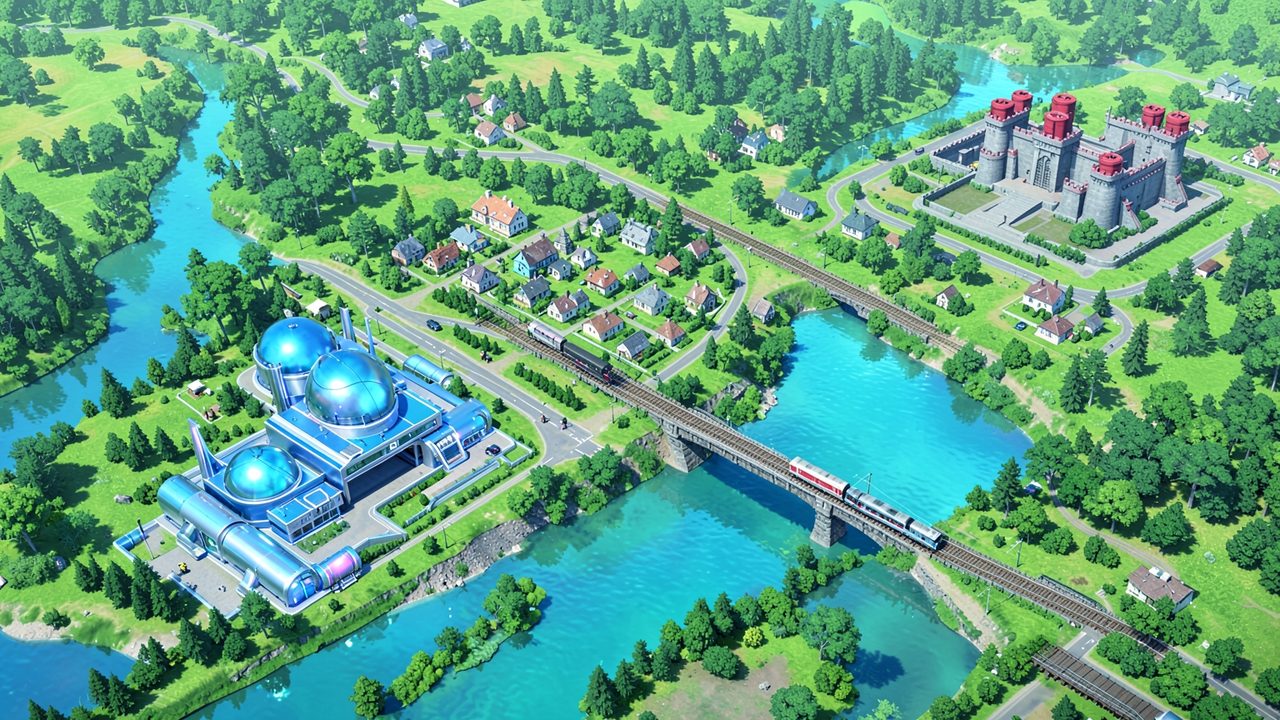
A wide isometric view of a green river valley seen from high above: two military bases on opposite banks, a railway with a train crossing a bridge, a small town, forests and a winding road between them.
"Every front is a living map: towns, trains, bandits, wildlife, and an enemy who has to play fair."

Lore and story

The hour that went missing

It's an alternate, atomic-age world of streamlined tanks, gleaming walkers and tidy prefab bases, where a lab accident one quiet afternoon taught people to nudge things a little way into the future. The trick spread faster than anyone could agree on what to do with it.

Now every warlord with a grudge and a factory has a chrono drive. Some want land, some want to rule, and the worst of them want to own tomorrow: to call in an army from a future that hasn't happened yet and dare the world to stop them making it real.

The Meridian Guard

You command a field force of the Meridian Guard, the people who answer when a region falls under one of these regimes. You arrive with a construction vehicle, a few squads and a chrono drive of your own, and you push the regime out, front by front, until the region belongs to the people living in it again.

The commanders you face are built from the oldest failings there are: the proud one who can't retreat, the greedy one who overextends for every crate, the furious one who throws everything at the last place you hurt him. Each plays by the same rules you do.

The war right now

A new front has opened. The briefing shows a river valley, a railway, a town caught in the middle and a regime base on the far bank. You have a construction vehicle and a plan to make.

Controls and interface

The controls are Red Alert 2's, with the additions of modern strategy games like Zero-K and Beyond All Reason: queued orders, area commands, formation drags, repeat queues for factories. On top sits the time dial.

Time

Space
Pause and resume
Q / E
Turn the time dial slower or faster
Shift
Hold to queue orders into a plan

Orders

Left click, drag
Select; box-select
Right click
Move, attack or interact
Right drag
Formation move: set the line and its facing
A / G
Attack-move; guard an area

Chrono

J
Jump forward in time: pick a spot and a delay
B
Borrow units from the future
I
Raise an interdiction field

Base and groups

T
Base plans: place a whole block at once
Ctrl + 1–9
Make a group; 1–9 selects it
Esc
Menu and save

The time dial runs smoothly from full speed through a Fallout VATS-style crawl to a dead stop, with no menus and no cooldown. It's a singleplayer game, so there's nobody to wait for: the battle simply moves as fast as you want it to.

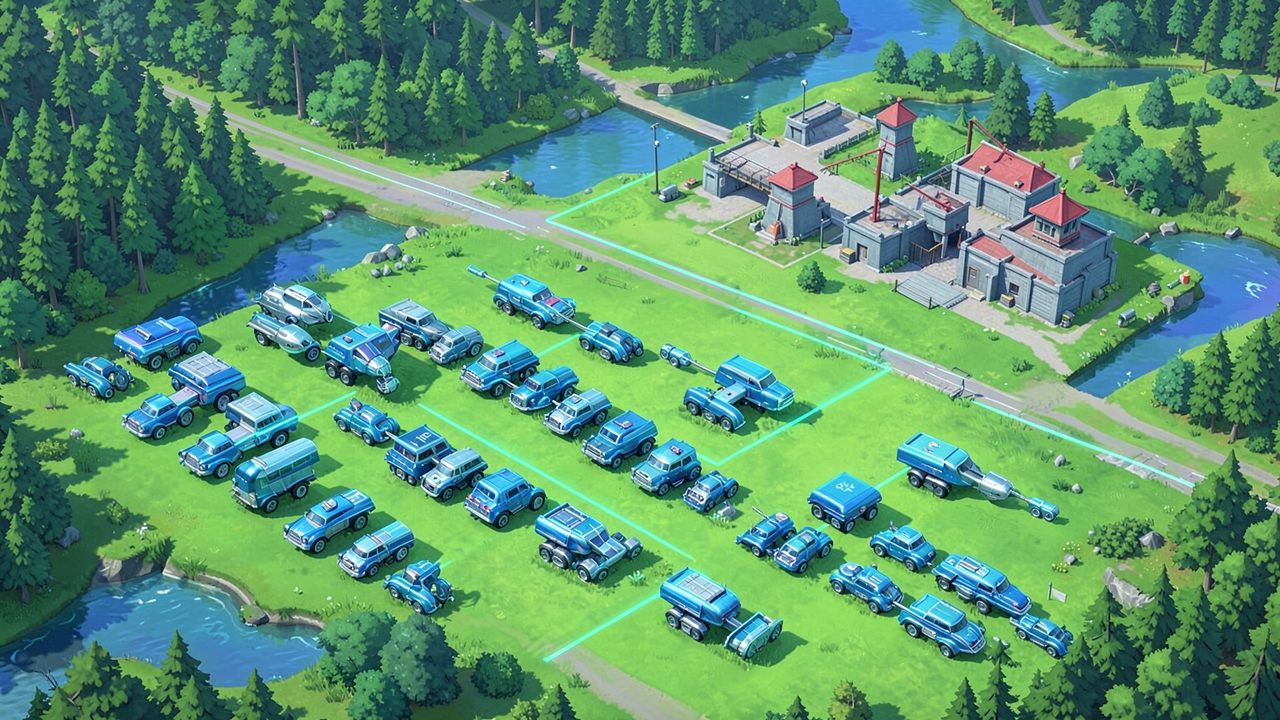
An isometric green valley where rows of blue and silver tanks and armored trucks stand massed in formation on a meadow, facing a grey fortress with red roofs across a road and a river.
"Stop time, draw the plan, let it run. A formation arrives together and fights together."

Game layers

  1. 01 · Moment-to-moment

    Plan, run, adjust

    Slow the battle down and look. Split your army into the groups the situation needs: anti-armor for the tanks, anti-air for the gunships, anti-infantry for the swarm, a scout out front. Draw their routes and timings, let time run, and step in whenever something surprises you. Between fights, run the base, gather resources and pick up the supply crates scattered across the map.

  2. 02 · Low metagame

    A front

    A front is a generated campaign: a chain of battles across one region, each with a briefing, a goal and its own starting state. What you hold at the end of one battle shapes the next: a base you took becomes a base you start in, a bridge you blew stays blown. The front ends when the regime is out of the region.

  3. 03 · High metagame

    The war map

    Between fronts you look at the war map: the regions you've freed, the regimes still standing, the commanders you've met and what became of them. Every front leaves its mark there, along with a short report of each battle in it, which is a history of your war rather than a score.

    There's always another front, because there's always another warlord with a chrono drive. The war map just keeps getting brighter.

  4. 04 · Practical game flow

    A battle an evening

    The pace is a little slower than Red Alert 2, so a battle runs about half an hour to an hour, and a front a handful of evenings. Pause and save at any moment, mid-battle included. The end of each battle is a natural place to stop.

Game modes

ModeWhat it isWhat it's for
FrontsGenerated campaigns of linked battles across a region, on the war mapThe main game: a campaign's context and consequences, with open-ended battles
SkirmishA single battle on a generated map, with the starting state, opponents and size you chooseOne evening's battle exactly the way you want it, or a place to try an idea

Both nest the same way:

The war mapEndless: front after front.
A frontA region freed, battle by battle: a few evenings.
A battleOne map, one goal: half an hour to an hour.
A planOne set of orders, laid out in slowed time and run: a minute or two.

Features and mechanics

  1. The heart of it

    Slow motion on demand

    A classic RTS asks one person to do, in minutes, the work of a whole army staff: scouting, logistics, base building, and the tactics of every unit at once. It's fun for a while and then it's a blur. Most players end up doing the one thing that's possible at that speed: building a death ball, one huge blob of units, and throwing it at the enemy.

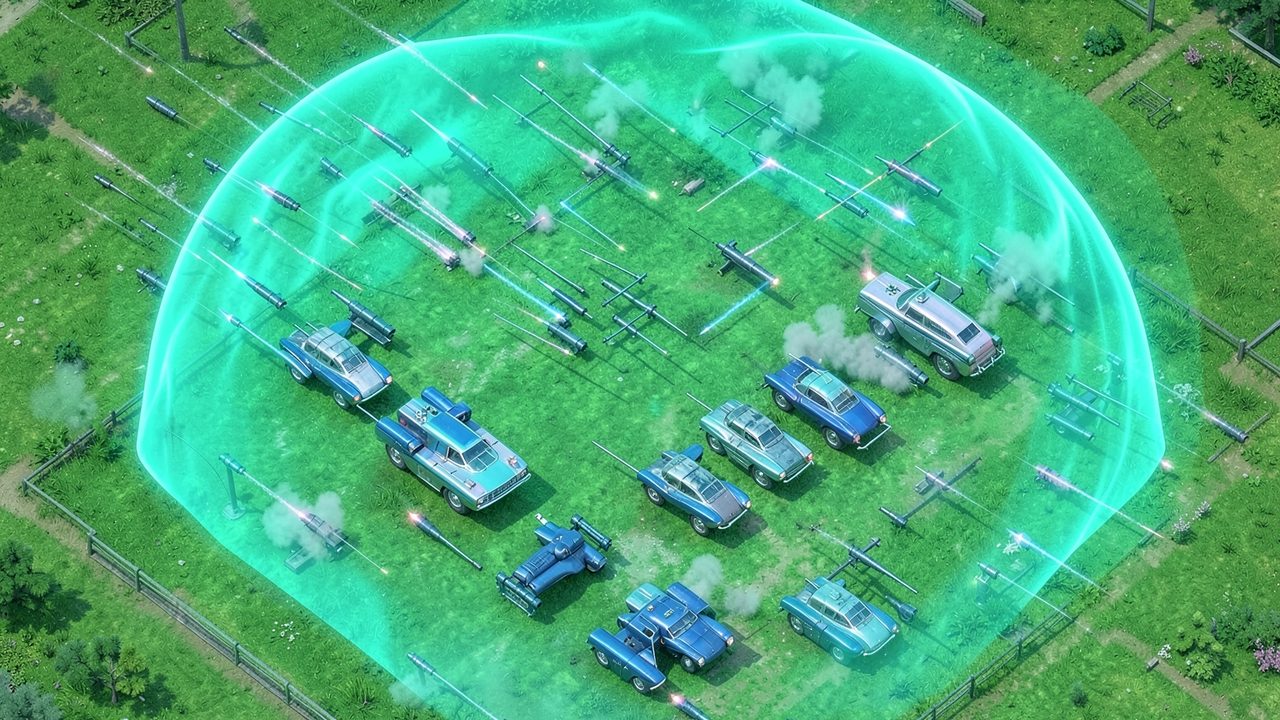
    Temporal Shift gives the player control over time itself. The dial slows the battle smoothly, all the way to a crawl and then a full stop, whenever you want and for as long as you want. Nothing is lost by slowing down, so the battle moves at the speed you think.

    A battlefield seen from above in frozen slow motion: dozens of shells and missiles with glowing trails hang motionless in the air over blue and silver tanks inside a huge translucent teal dome of slowed time.
    "Slow time to a crawl or stop it dead, as often as you like. The battle waits for your plan."
  2. Command, don't click

    Plans that play out

    Tiberian Sun and Red Alert 2 had fine waypoint systems that hardly anyone used, because there was never time. With time stopped, they come into their own: queue routes and timings for every group, tell the artillery to open up when the tanks reach the ridge, send the engineers in behind them, then let time run and watch the plan go.

    Plans don't have to be perfect. Make small corrections as it unfolds, or freeze everything the moment the enemy does something you didn't expect.

  3. Time as a weapon

    Three ways to bend time

    The chrono drive gives both sides the same three tools:

    ToolWhat it does
    Jump forwardA unit vanishes from the field and reappears where you told it, within a radius, after a delay you set. It skips everything in between, walls and minefields included.
    Borrow from the futureUnits arrive now that you haven't built yet. Later you have to build them and send them back from the place they came from, or pay for it.
    InterdictA field that catches enemy units in mid-jump and drags them back into the present early, wherever they happen to be.

    A jump leaves a faint shimmer where it will land, a few seconds before the unit arrives. Slow time and you can read the enemy's jumps on the map, and meet them.

  4. A debt to yourself

    The paradox

    Borrowing from the future is the most powerful thing you can do, and the most dangerous. The army arrives right now, when you need it. In exchange, a marker on the map shows where and when those same units must be sent back from: you have to build them in time, get them to the spot and send them.

    If you can't, time collapses around your base: a spacetime tear that wrecks it like a superweapon strike. It's shown plainly before you borrow, with the deadline in front of you the whole time. It's a loan you take knowingly, never a trap.

    The enemy borrows too, and their debt markers can be seen. Cut off the factory that has to repay the loan, and let their own future come for them.

  5. No more conga lines

    Armies that fight together

    In the old games an army marched in a single file. The unit in front stopped to shoot the moment it saw an enemy, blocking everyone behind it, who then tried to walk around and did the same. A force big enough to win got fed into the grinder one unit at a time.

    Here groups move in formation at the pace of their slowest member and arrive together. Friendly units have small collision boxes, so they slide past each other instead of jamming, while their boxes against enemies are larger, so a line of tanks really does block a road. On contact the formation spreads into a firing line instead of stopping in a queue.

    Units also choose targets sensibly. An anti-armor squad shoots the tank, not the infantry beside it; nobody ignores the defense turret that's killing them to chase a damaged unit into the enemy base. You can set priorities per group, but the defaults should already be what a sensible soldier would do.

  6. Same rules on both sides

    An AI that never cheats

    In Tiberian Sun and Red Alert 2 the computer could build units without owning the buildings that make them, and started without the tight budget that made every early loss crippling for the player. The AI here has the same economy, the same prerequisites, the same build times and the same fog of war as you.

    So attrition cuts both ways. Destroy its refinery and it really is poorer; wipe out an attack wave and it really has to rebuild. And losing a few early units never cripples either side, because reinforcements trickle in along each side's supply line all battle long.

    What makes the AI commanders different from each other is personality, not cheating: the proud one who won't retreat, the greedy one who overreaches. Learn them, and use it.

  7. Bases without the busywork

    Neat bases, fewer clicks

    Building a tidy base with walls, pavement, gates and lights is half the charm of the genre, and also the biggest drain on attention. Here you lay out base plans: a power block, a refinery yard, a wall line with gates, placed in one move and built in order by your construction crews. Damage is repaired and lost buildings rebuilt from the plan, unless you tell them otherwise.

    And bases aren't always built from nothing. You'll still often start with a lone construction vehicle, but many battles begin with bases already standing, yours and the enemy's, taken in an earlier battle of the front or left over from the war before. The generator keeps those starts fair: an uphill battle is fine, a hopeless one isn't, and the briefing tells you which you're in.

  8. Not a Simon-says affair

    Campaigns with open battles

    Classic campaign missions are handmade puzzles: the author built a scenario that funnels you toward the one solution they had in mind, so it's barely surprising the first time and pointless the second. Reactorcore calls it a "Simon-says affair".

    Fronts keep what campaigns are good at, a story, a briefing, objectives and a starting situation, and generate it all instead of scripting it. Each battle is then an open-ended skirmish: win it however you like. Maps follow Deus Ex's approach of several ways through, so even a map that favors one strategy leaves room for another.

  9. A world, not a chessboard

    Maps with a life of their own

    Terrain matters as in Advance Wars 2: roads, forests, hills, rivers and swamps change how fast things move and how well they hide. Between the two bases live other things: hazards to avoid, minor bandit groups and unaffiliated hostiles, wildlife, and trains and barges that belong to nobody and carry whoever boards them.

    Supply crates turn up across the map, and organizing a pickup without losing the truck is a small operation of its own. All of it feeds the plan: a train is a fast way across the map, and an ambush waiting to happen.

Trivia

Two RTS ideas in one notebook

Temporal Shift shares its design file with Type 1-X Mecha, an RTS of tiered mecha across planets and space. Reactorcore's note says the two can be combined into one game, or Temporal Shift can be built first as a small proof of concept. The time machinery is the important part, because it answers what Reactorcore calls the nonsense core of the classic RTS: one person doing the work of a thousand trained specialists, alone, in an absurdly tiny timeframe.

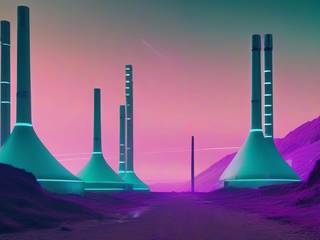
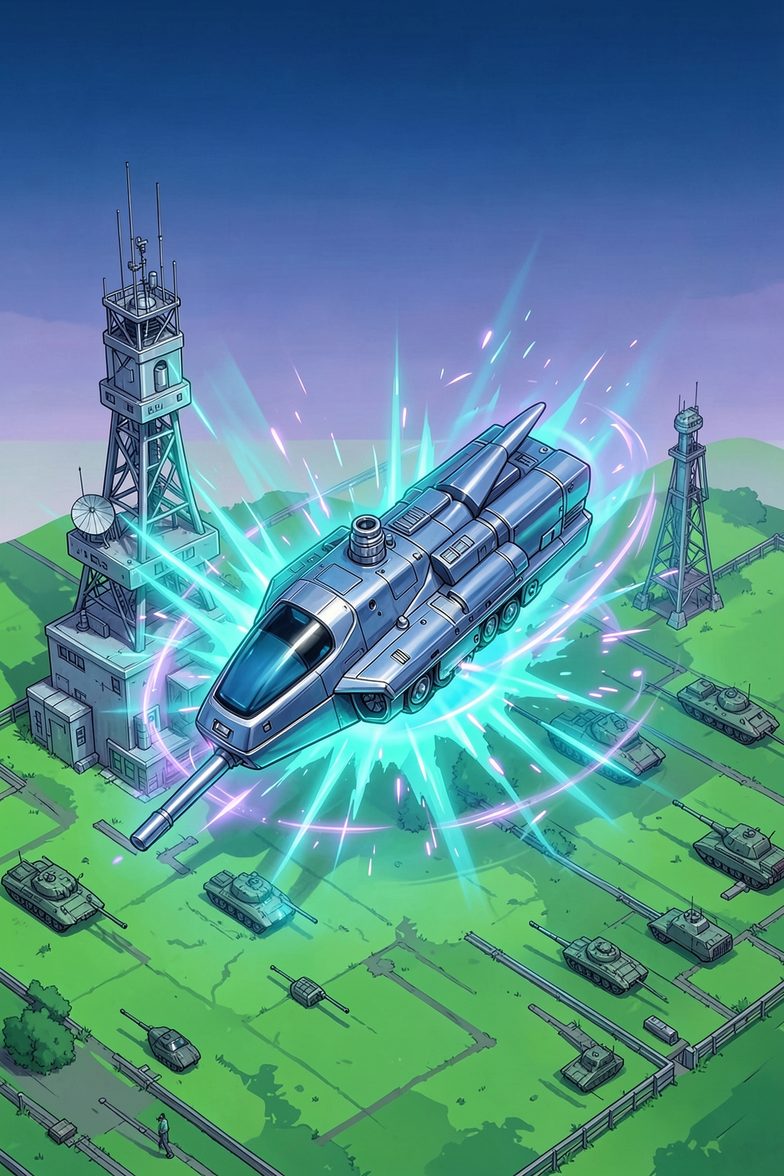
Box art: a heavy silver and blue hover tank bursts out of a glowing teal rift between two lattice radio towers, small tanks spread across the green fields below, a deep blue and lilac evening sky above.

Field orders

Temporal Shift: Time-Bending Real-Time Strategy

Commander: a regime has taken the river valley and is borrowing an army from next week to keep it. You have a construction vehicle, three squads and a chrono drive.

Take all the time you need. Literally. Stop the clock, study the ground, draw the plan, and make sure their tomorrow never arrives.

Stop the clock. Draw the plan. Let it run.