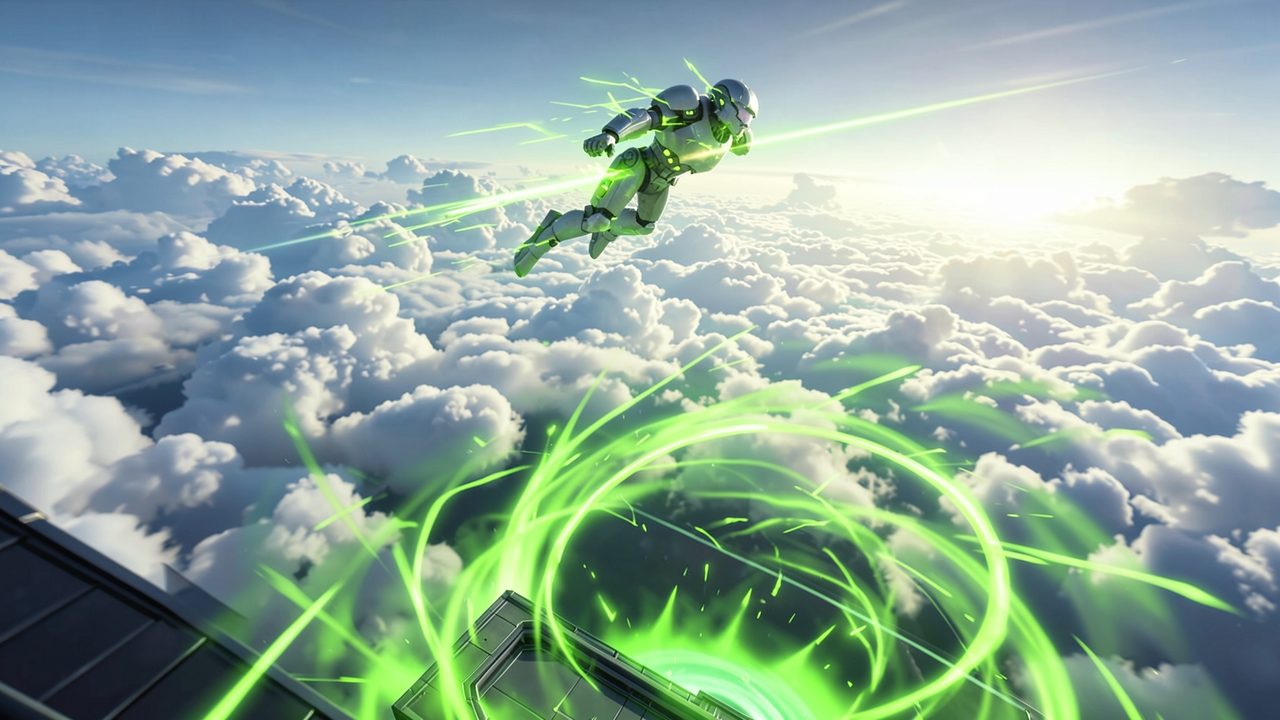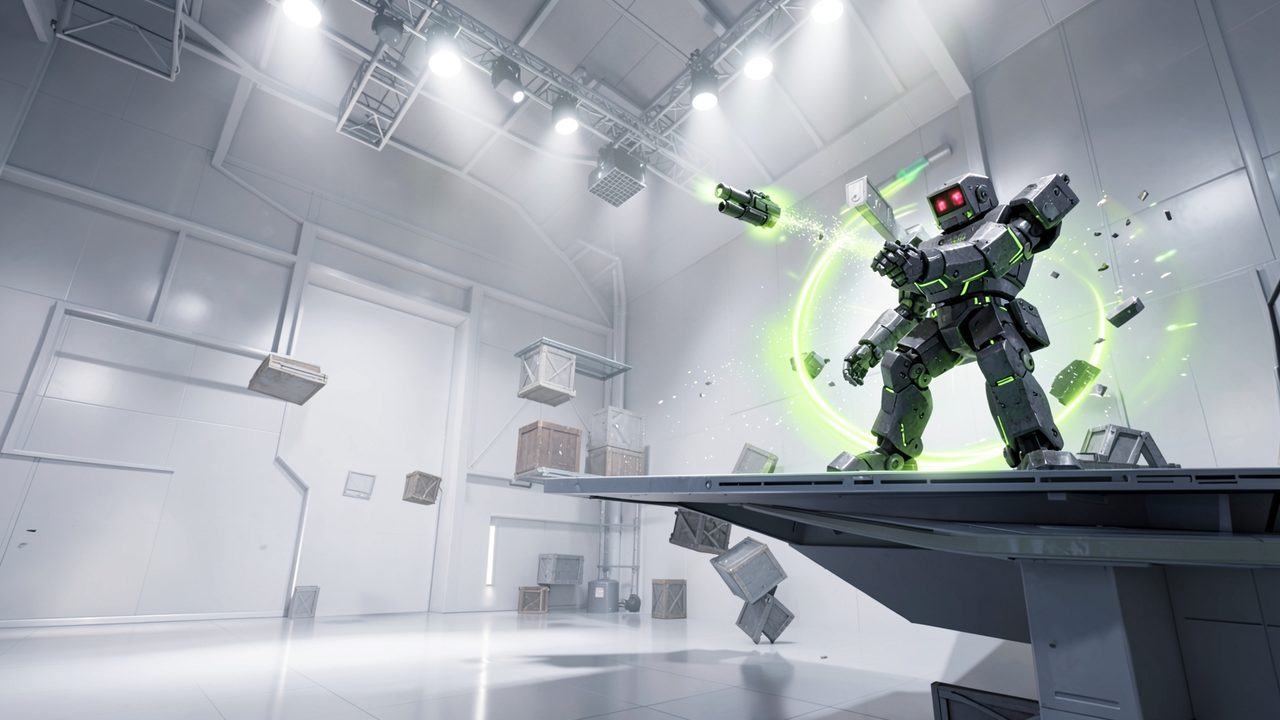
A boxy graphite robot fighter with lime-green glowing seams fires a blaster from the edge of a floating platform in a bright white test hangar, a lime shockwave ring bursting around it and debris flying.

AAL Smash DroidsResonance Knockout Arena

Reactorcore's Personal Game Design Project

Free to forkNo licence and no copyright claim: build this game under your own name, or lift one idea from it. Why?

Game overview

AAL Smash Droids is a 2D platform fighter in the spirit of Super Smash Bros, played with guns. Build an android fighter, give it two weapons from a big arsenal, and knock other androids off the stage once their armor is ringing with enough stored impact.

There are no innate superpowers. Fighters are 32-pixel androids with whatever loadout you gave them: rifles, shotguns, swords, hammers, a jump type, a smash punch, a block. Everything else is picked up off the floor. It plays at a comfortable, floaty pace, closer to Soldat or Halo: Combat Evolved than to a twitchy fighting game, so fights are won by positioning, timing and catching an opponent mid-reload.

It's inspired by Super Smash Bros, Brawlhalla, Duck Game, Soldat and Robot Wars, and set in Reactorcore's AAL universe.

Target audience

Players who love the knockback chaos of platform fighters and the gunplay of Duck Game or Soldat, but find fighting games too fast, too combo-heavy or too much about beating another person.

They want clever, readable fights: line of sight, cover, a reload to punish, a smash hit landed at the right moment.

Mouse aim and WASD, with weapon handling on the keys nearby. Movement floats and projectiles fly a touch slow, so dodging is about reading the fight, not reflexes.
Game's purpose

Play and silliness: armored androids blasting off over the horizon at absurd speeds.

Mastery: positioning, timing, and knowing exactly when an opponent can't shoot back.

Creativity: building your own fighter, from its body to its jump.

It deliberately avoids draining equality and connection (there's no ranked ladder, and the two-player mode is sparring, not a contest) and rest (a calm pace, and short bouts with a natural break after each).

Core concept

Platform fighters usually sell themselves on beating other people, and their characters are fixed sets of moves to memorize.

Here you build the fighter, and its moves come from the weapons it holds, which you can drop, throw and swap mid-fight. You fight AI opponents, alone or with a friend beside you, through generated gauntlets and boss hunts.

When two people do face each other, it's Spar Training: framed as a dance in which both sides get better, not a tally of who knocked out whom.

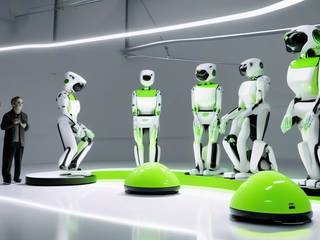
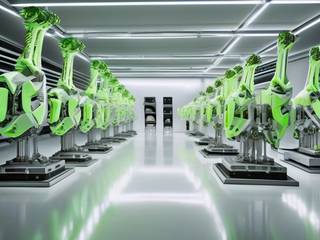
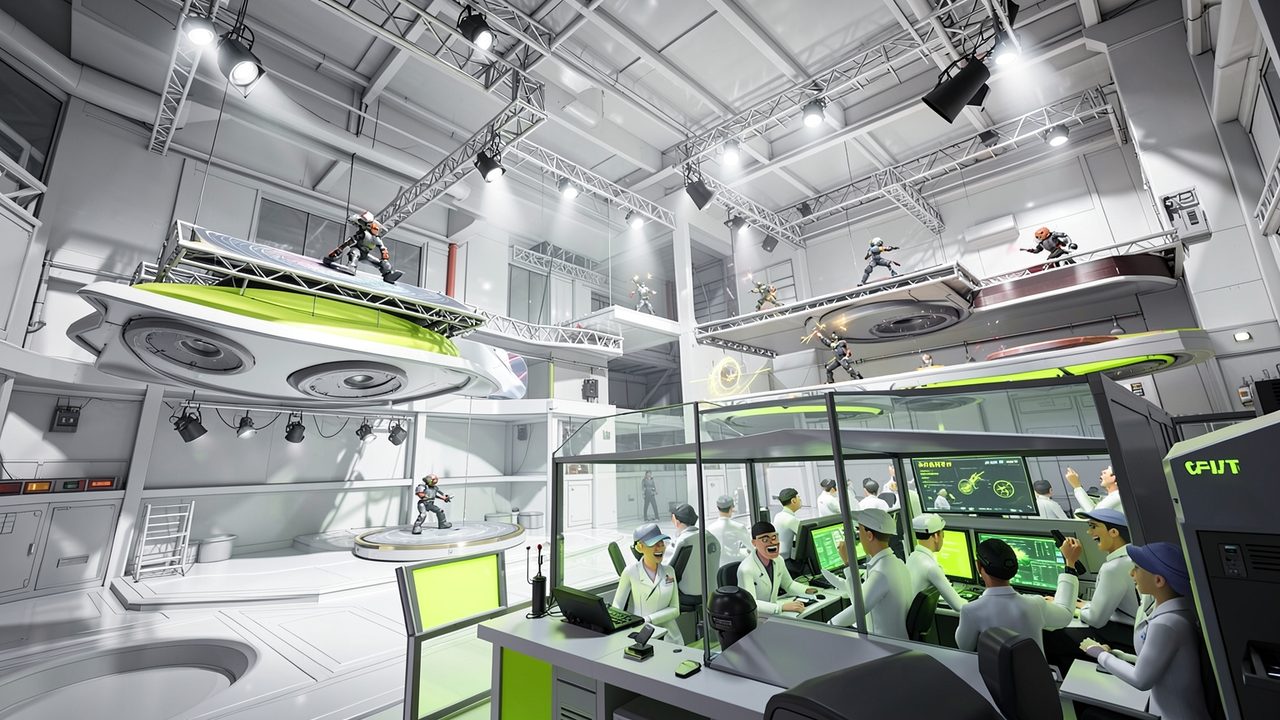
A huge bright white test hangar with floating arena stages and small robots fighting on them, engineers cheering at lime-lit consoles in a glass control booth in front.
"Too tough to break, too easy to launch: the frame failed every combat trial and became the best toy in the lab."

Lore and story

A frame that failed upward

In an Alteisen Arsenal Laboratories test facility, engineers built an experimental armored android frame. Powered up, its armor is close to indestructible, almost comically so, the way Gundam SEED's Phase Shift armor is: hard as anything while it's energized, ordinary light metal the moment the power cuts.

The catch is where the energy of every hit goes. The armor doesn't shed it; it stores it as resonance, a vibration that builds up in the frame. The more it has absorbed, the less it takes for the next hard hit to release it all at once and send the android flying toward the far horizon.

From failure to arena

For combat, that's useless: a frame that picks up charge from anything mildly hazardous can't hold a line. For fun, it's perfect. Someone on the team remembered the old platform fighters, everyone loved the idea, and the frames were repurposed for a battle arena: remote-operated androids fighting on makeshift stages full of hazards, purely to watch them blast off.

Nobody is inside. The androids are flown from a booth, and when a fight ends, combat mode powers down and the stored resonance bleeds away safely, so a frame can be patched up for the next bout. This is the AAL universe's Golden Age, when nobody has to work, and an AAL lab has all the time in the world for a ridiculous idea.

The arena now

The program has grown: a set of arenas, a stable of house fighters, and a gauntlet anyone can enter with a frame of their own design. The job is simple. Build a fighter, pick its guns, and see how far you can send the others.

Controls and interface

You control one android directly, with mouse aim as in Soldat. Its weapons are separate sprites held in two floating hands, and each weapon turns toward the crosshair at its own speed: a pistol snaps round, a heavy cannon swings slowly, so every gun's handling is part of who it is.

Move

A / D
Move left and right
W
Jump, in the style your loadout gives
S
Crouch, or drop through a platform
Space
Dash or leap toward the pointer
Ctrl
Sprint

Fight

Mouse
Aim; the weapon turns to follow at its own rate
Left click
Fire or swing; empty-handed, try to slap an opponent's gun away
Right click
Smash punch toward the pointer, or block when holding a melee weapon
Shift
Block, in the style your loadout gives

Weapons

Q
Switch to the other carried weapon
R
Reload
E
Pick up, swap with a weapon on the floor, or interact
F
Throw the weapon in hand
Z
Drop it

Kit

X
Auxiliary ability
C
Use the consumable item
Esc
Pause

Jumps and dashes can be aimed with the mouse toward a point instead of always going straight up, which is what makes micro-gravity and reversed-gravity arenas playable. The HUD is a single colour of your choosing, like Fallout 3's.

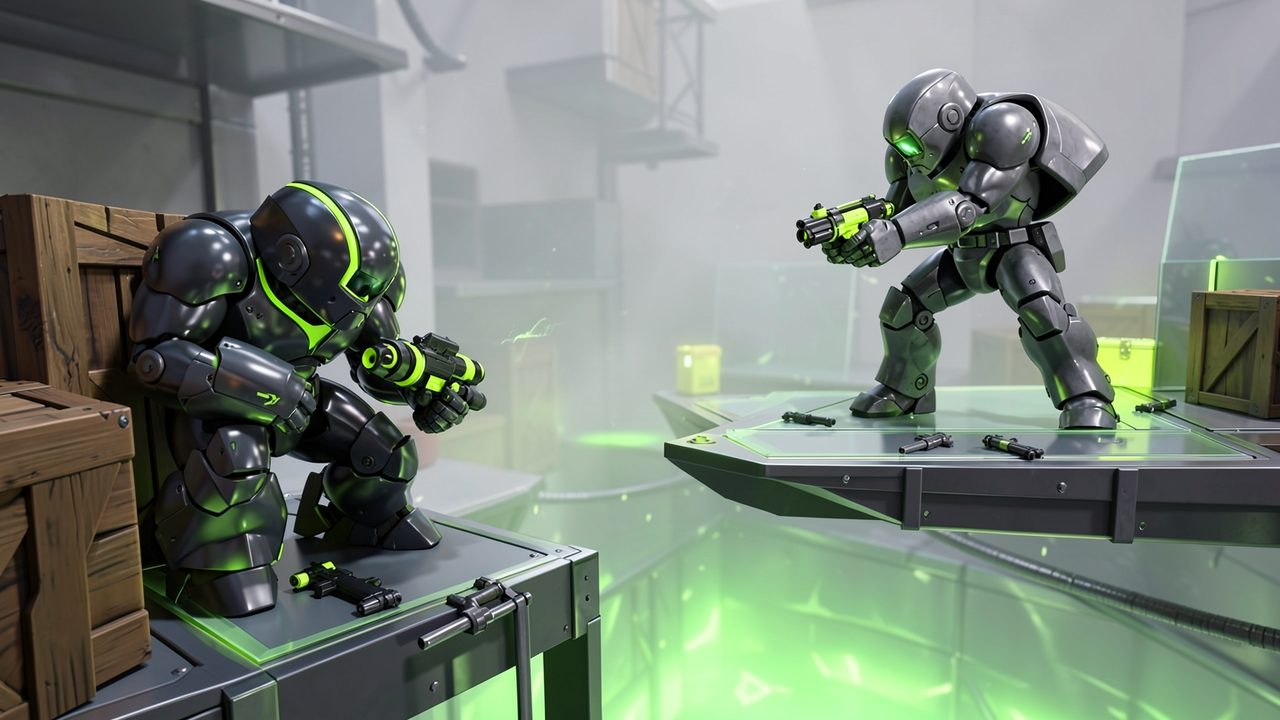
Two chunky graphite robots with lime seams on floating arena platforms: one crouches behind a wooden crate with a blaster, the other aims from a higher ledge, spare blasters lying on the floor.
"A gun mid-reload can't shoot back. That's the moment to close in."

Game layers

  1. 01 · Moment-to-moment

    A bout

    Fighters spawn at spawn points on a handcrafted arena, the way they do in Smash Bros or Unreal Tournament, each with the loadout chosen beforehand. Hits build up resonance, smash hits launch, and once a fighter is charged high enough, a smash hit sends it off the screen. Weapons litter the floor, crates break and cover shatters.

    Bouts are against AI fighters, alone or with a friend on your side.

  2. 02 · Low metagame

    A gauntlet or a hunt

    A gauntlet is a run of random stages that ends with a souped-up final challenger, like a classic platform fighter's single-player run. A boss hunt is a chain of linear levels with a house fighter waiting at the end, in the spirit of Robot Wars' house robots, built from modules with randomized equipment, so no two hunts end the same way.

  3. 03 · High metagame

    The workshop and its scrapbook

    Above the runs sits your workshop: the fighters you've built, saved with their loadouts, body packs and paint, ready for any run. Nothing has to be unlocked. The whole arsenal and every body part is there from the start.

    The arenas reshuffle their spawn zones every time, every hunt's house fighter is rebuilt from modules, and every gauntlet rolls a new run of stages, so there's always a fresh one waiting. The workshop also keeps each fighter's history, the gauntlets it finished and the house fighters it sent flying: a scrapbook, not a ranking.

  4. 04 · Practical game flow

    Five minutes or an evening

    A bout lasts a couple of minutes, a gauntlet or a hunt about a sitting. The end of each stage is a natural place to stop, and the run waits there for you. For a short break, the Weapon Gallery is always open.

Game modes

ModeWhat happensWith a friend
Arena Tournament GauntletRandom stages, one after another, up to a souped-up final challenger.Co-op
Boss HunterA chain of linear levels with a randomized house fighter at the end.Co-op
Weapon GalleryA lab for trying any weapon on destructible targets, like Street Fighter II's car-wrecking bonus stage: strip a wreck layer by layer down to its engine block, then knock the block off the stage. There's no timer and no score; it shows you each weapon's numbers instead.Either way
Spar TrainingTwo players face each other as sparring partners. It's framed as a dance: the shared aim is for both to improve and finish level, not to pile up knockouts.That's the point

Features and mechanics

  1. The heart of it

    Resonance instead of health

    There's no health bar to empty. Every hit charges the target's armor with resonance, and the charge decides how far the next big hit sends it. Hits come in three kinds:

    HitWhat it does
    Light hitAdds resonance, with little or no knockback
    Smash hitAdds a lot of resonance and launches the target; the higher its charge, the further it flies
    Kill hitAn impact or crush strong enough to break the frame outright once its integrity is spent

    A knockout is a fighter launched off the screen, or broken. As in Smash Bros, a fresh fighter can take a smash hit and stay in the fight, while one ringing with charge can be sent over the horizon by a well-timed one. Light hits are how you get there.

    A steel-grey robot streaks away over a sea of clouds trailing lime-green energy, a huge lime shockwave ring spreading from the edge of an arena platform below.
    "A fresh frame shrugs off a smash hit. A frame full of resonance rides it over the horizon."
  2. Build your own fighter

    The loadout

    Before a fight you choose a primary and a secondary weapon, a reusable or passive auxiliary ability, a consumable item, a jump type (one big double jump, a medium triple jump, a small quadruple jump, or Kirby-style flight), a smash punch and a block type.

    A body pack sets the frame: lighter and faster, or heavier, tougher and harder-hitting. The trade is honest: more armor means bigger or more weak points, because a nimble fighter has to work harder to land its hits, so the heavy one has to give it something to aim for.

    Any 32-pixel character sprite can be a fighter, with two floating hands that grip its weapons. Hue-shift the body, tint the hands, and pick your HUD colour.

  3. Guns in a platform fighter

    Two weapons, one in hand

    Each fighter carries two weapons and uses one at a time. Switching takes an equip time that depends on the weapon being drawn, so pulling out a heavy cannon is a commitment. Weapons can be dropped, thrown, or swapped for anything lying on the floor, and dedicated melee weapons (swords, hammers and the like) are usually better than the default smash punch in some way.

    Disarmed fighters aren't helpless: with both hands empty, the fire button tries to slap the weapon out of an opponent's hands, once a second, as in Soldat.

    Ranges are stylized so they read inside an arena about a hundred meters across:

    ClassRange
    SniperAbout 150 m, further than the arena is wide
    LongAbout 60 m
    MediumAbout 30 m
    ShortAbout 10 m
    Melee1 to 3 m
  4. Scavenge and adapt

    Ammunition and the floor

    Ammunition is what lets the most devastating weapons stay devastating without being nerfed into blandness. Every fighter starts with both weapons fully loaded and no ammo regeneration. Small and big ammo packs turn up around the arena, each for one type. Run dry and you do what everyone else does: drop the spent gun and grab whatever's nearby.

    Spent weapons stay on the level until they're pushed off it, or thrown hard against things often enough to break, or kept safe until you find their ammo. A weapon finishes reloading while it's stashed, and pauses its reload when it's dropped or thrown.

    Two other rule sets are there for a change of feel. In throwaway rules there are no reloads, more guns spawn, and every gun breaks after enough hits, as in Hotline Miami. In endless rules there's no ammo at all, and every weapon is balanced by its refire, reload and pre-fire delays instead.

  5. Comfortable, not twitchy

    A pace for thinking

    Fighters move slowly and float a little, so they're never maddening to hit. Projectiles fly somewhat slower than real ones, so a shot can be read and dodged. Weapons turn to the crosshair at their own rate. And the hitstun, dodge and shield rules are reworked from Smash Bros so that ranged combat never turns into being juggled from across the screen.

    All of it points one way: tactics over reaction speed. You win with positioning, cover, mobility and timing, by hitting an opponent while they're stuck in a reload or a cooldown, and by not giving them the same chance.

  6. Same stage, new fight

    Arenas with spawn zones

    Arenas are handcrafted in the spirit of Soldat's maps: corners, curves, hills, obstacles, and colliders that stop only projectiles, to break up lines of sight. Reinforced crates, barrels, boxes, tables and glass make cover that holds until it doesn't.

    Every arena has spawn zones where weapons, ammo, power-ups and extra hazards turn up differently each time, so a familiar stage still plays as a new fight. Power-ups include medkits, supply packs and short boosts to speed, damage, rate of fire and jump height. Some arenas reverse the gravity, or take most of it away.

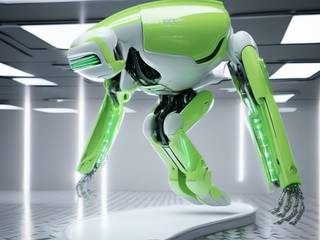
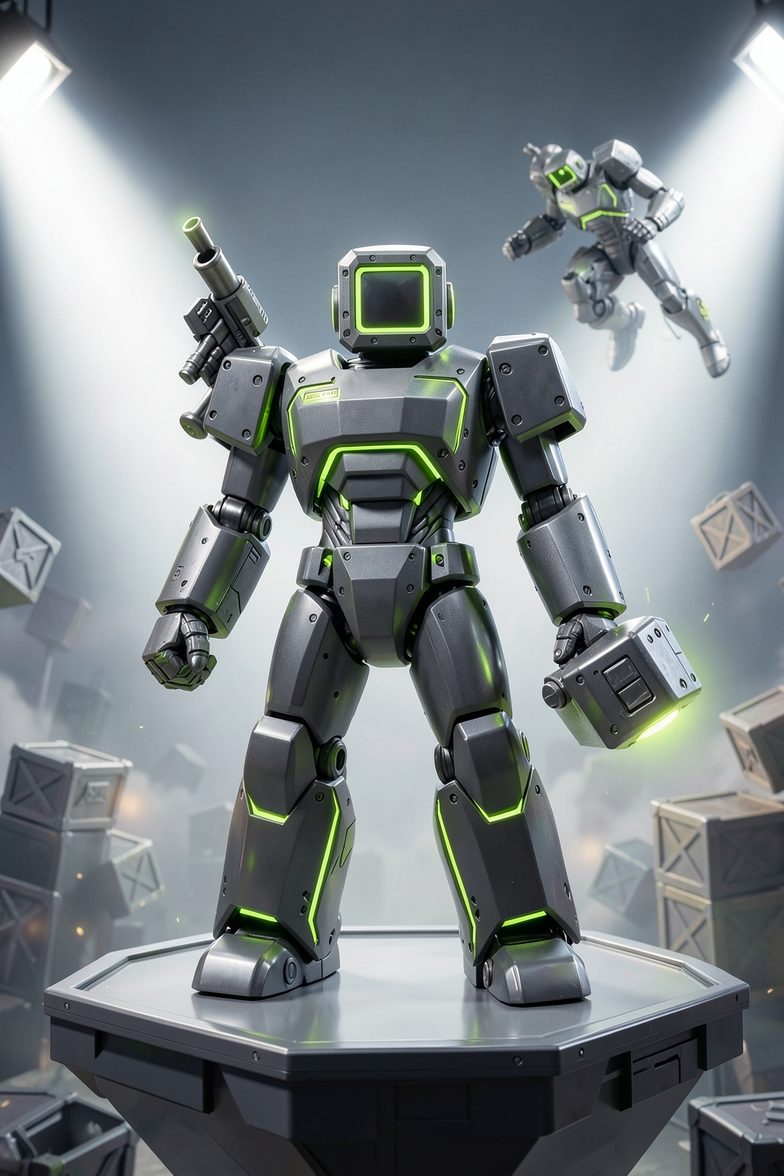
Box art: a boxy graphite robot fighter with a square visor head and lime-green seams stands on an arena pedestal holding a blaster and a hammer, another robot tumbling through the air behind it.

Now entering the arena

AAL Smash Droids: Resonance Knockout Arena

The lab built armor that can't be broken, then found out how easily it can be launched. So they built an arena around it.

Design a frame. Pick two guns and a jump. Ring your opponent up with light hits, wait for the reload, and land the one that sends them over the horizon. Then patch up, and go again.

Charge them up. Send them flying.